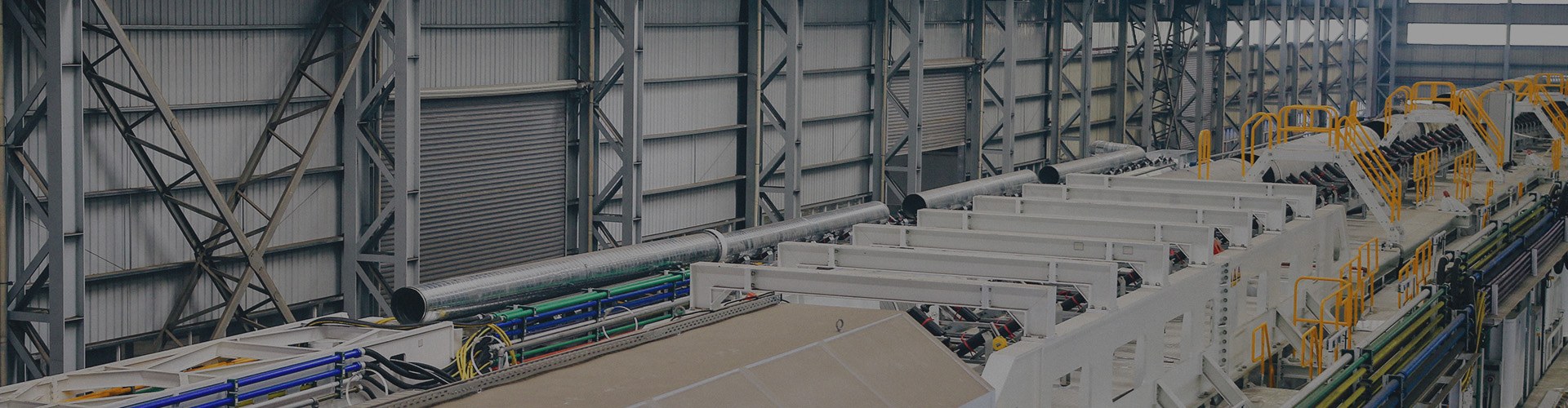
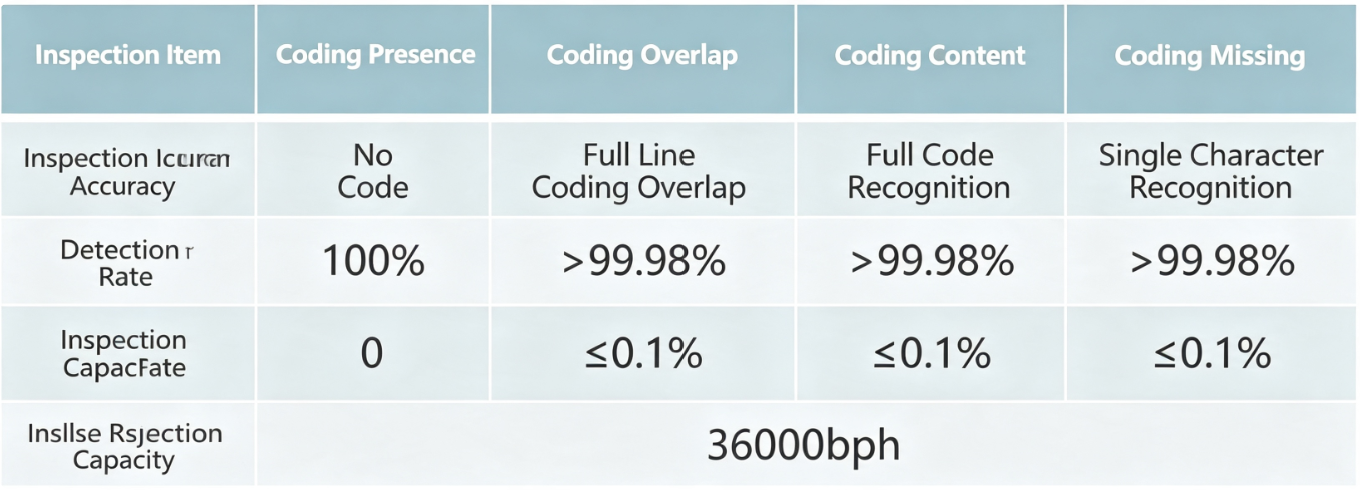
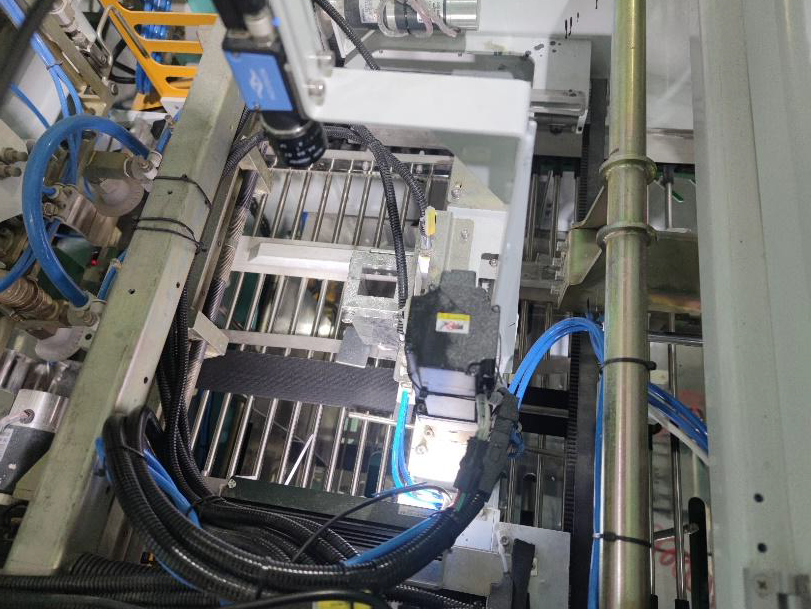
● Well‑planned on‑site cabling supports multi‑camera operation while eliminating cabling‑induced interference for reliable communication and inspection. The layout remains tidy and professional.
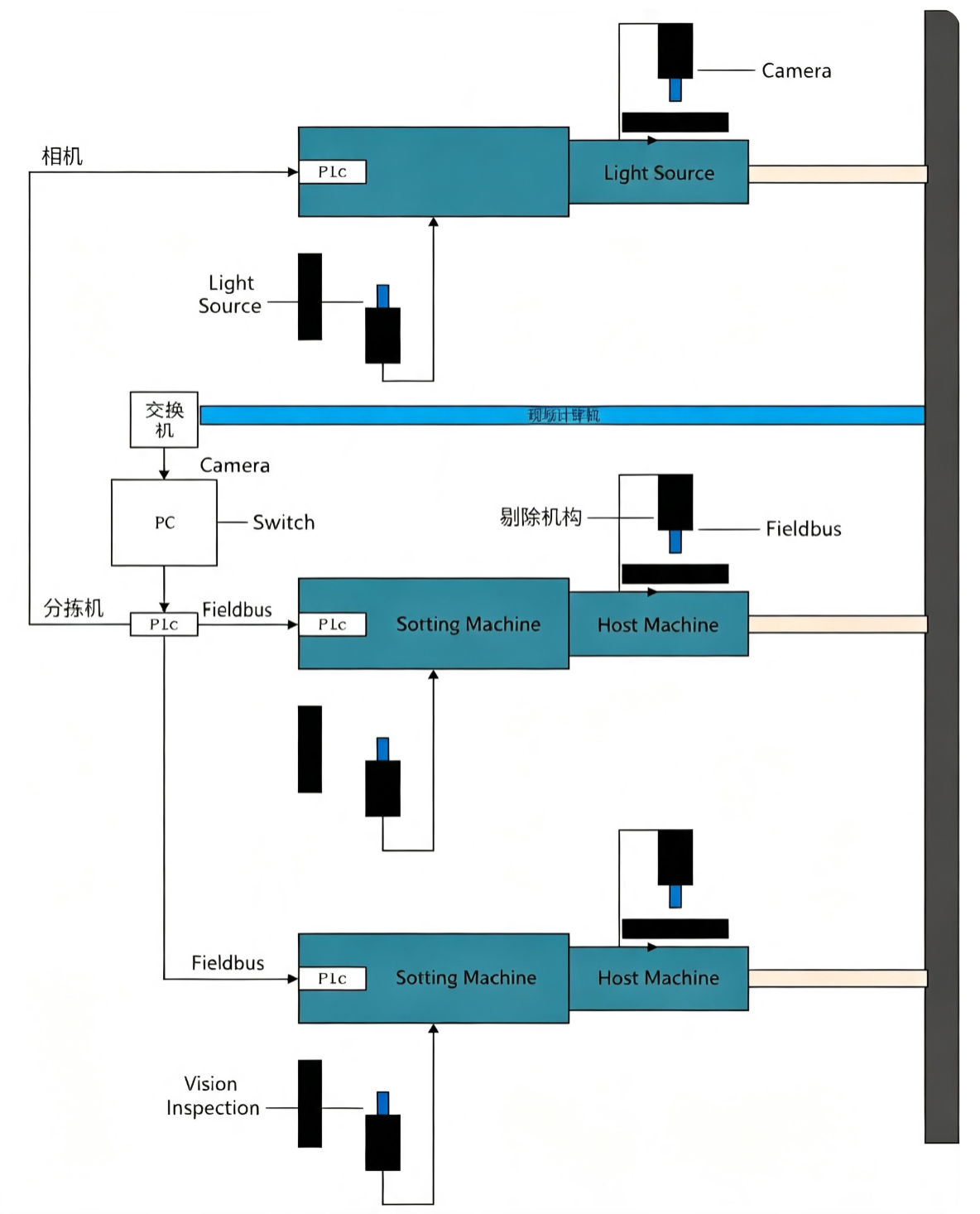
● Photoelectric hardware triggering is implemented: trigger signals feed into the Inovance PLC, which routes signals onward to camera trigger lines.
● All camera Ethernet cables terminate at Inovance switches to facilitate dedicated, independent image transmission.
● Image processing is completed on a PC, which delivers inspection results to the Inovance PLC. The Inovance PLC passes signals to the customer‑hosted PLC through digital output points, removing the need for direct PC‑to‑customer‑PLC communication.
● The 1‑to‑6 multi‑camera architecture maximizes hardware utilization, addresses field‑level challenges and delivers superior cost‑performance.

● Seamlessly integrates with existing on‑site machinery without causing mutual interference.
● Electrically interfaces with local production equipment to ensure smooth image capturing and defective‑product rejection workflows.
● Optimized operational design ensures the rejection process does not disrupt the operation of host production equipment.

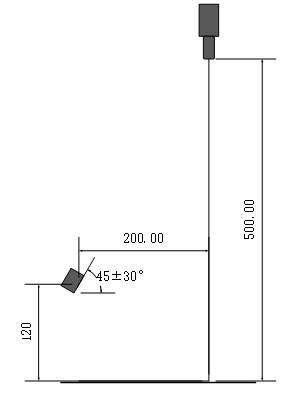
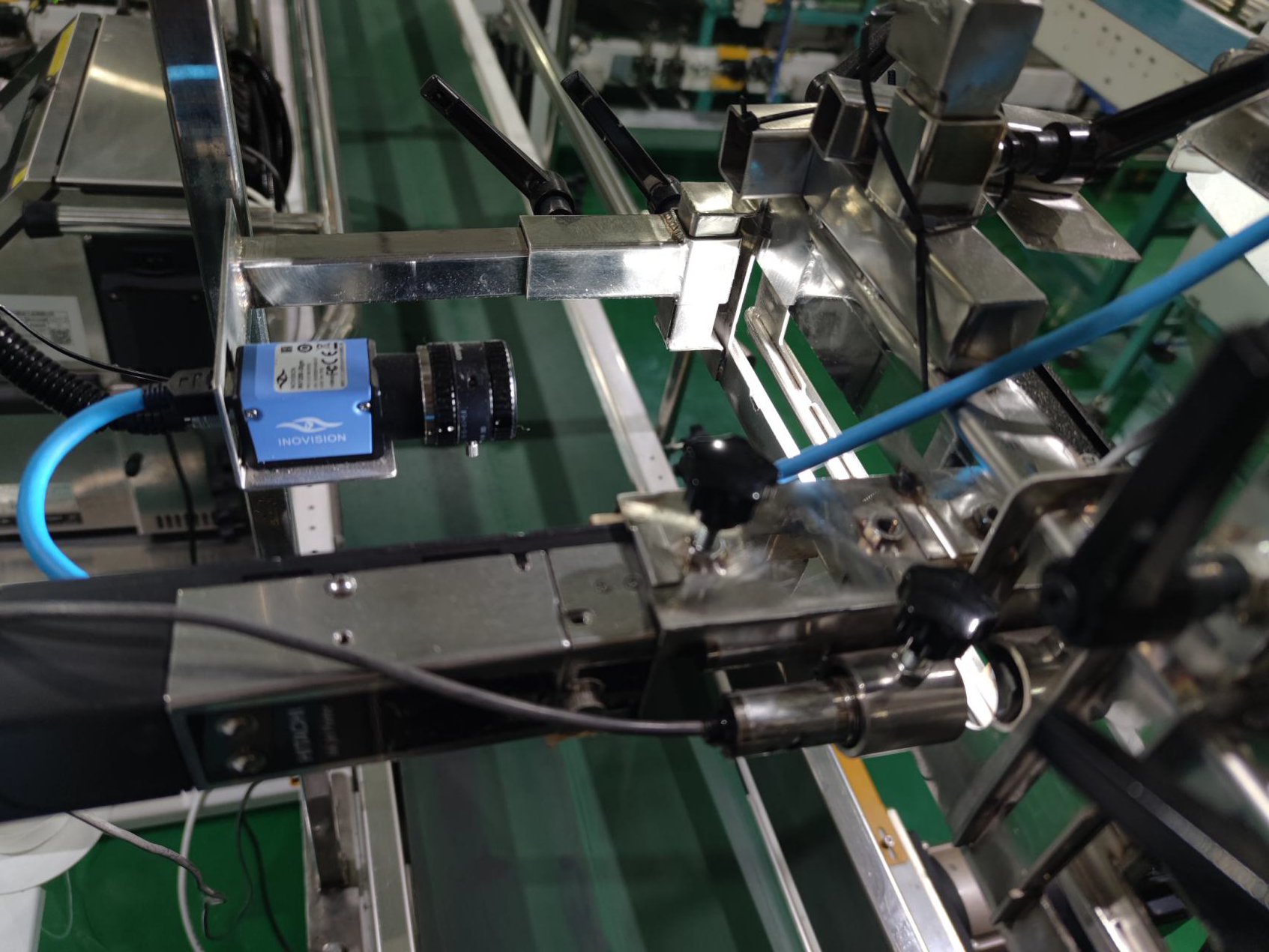
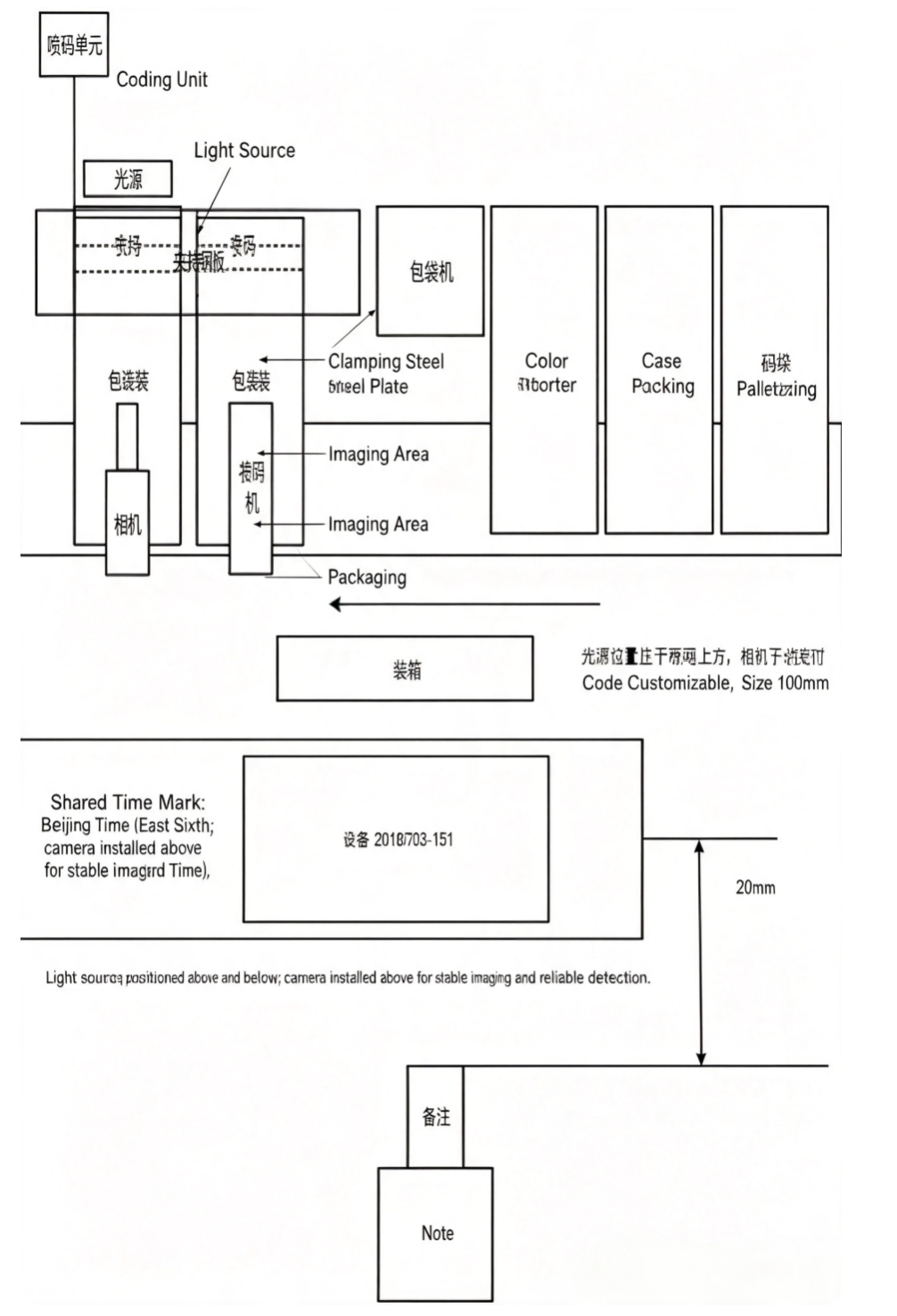
● The camera is mounted downstream of the ink‑jet printer. Images are captured through cut‑outs on clamping steel plates immediately after coding, to guarantee flatness at the printing area.
● Camera triggering for image acquisition takes place during product conveyance. The camera faces directly toward the coding zone; its height is adjustable to align the center of field‑of‑view with the target printing position as the coding location varies.
● Rejection mechanisms are customized for site‑specific conditions to ensure convenient on‑site operation.