ch
ch English
Rising labor costs and stricter food safety supervision prevail in the food and pharmaceutical sectors. Conventional manual inspection suffers from high missing defect rates. Deep learning-based AI visual inspection equipment is rapidly gaining popularity. It can detect dozens of defect types such as printing codes, heat-seal faults, missing contents and label defects with 24/7 continuous operation. Automation upgrade orders keep growing for grain & oil, health supplement and packaging manufacturers.
Food and pharmaceutical packaging industries have long relied on manual visual inspection for appearance, coding and sealing quality control. This model brings inherent drawbacks. Long hours of visual work easily cause operator fatigue, resulting in an average defect escape rate of 12%–18% for manual checking. Year-on-year increasing labor costs squeeze corporate profit margins. Furthermore, tightening national regulations for food and pharmaceuticals impose heavy fines and brand damage once defective goods reach the market. Combined pressures push factories to upgrade to automatic inspection solutions.
Thanks to mature deep learning image algorithms, the commercial cost of AI vision inspection systems has decreased significantly, making them standard equipment on packaging production lines. Unlike traditional rule-based vision systems limited to predefined defects, deep learning models are trained on massive product samples to identify irregular long-tail defects including heat-seal bubbles, incomplete or blurry codes, skewed/missing labels, missing contents and bottle damage. The overall defect detection rate steadily exceeds 99.5%, with the false detection rate controlled below 0.5%.
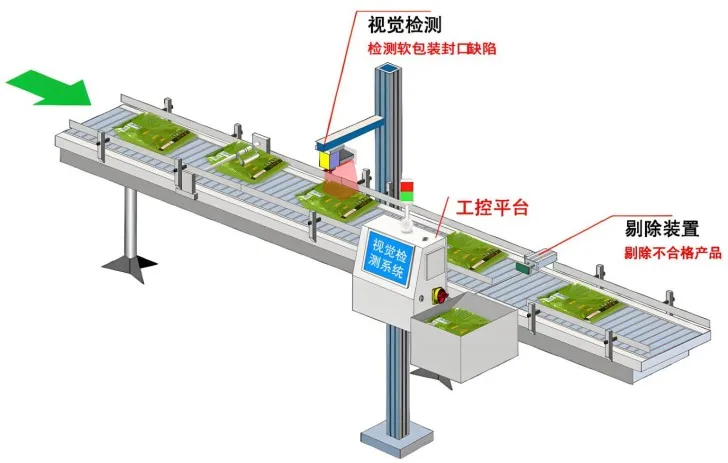
In operation, integrated AI vision machines support 7×24-hour unattended continuous production. Equipped with automatic defective product rejection and production data recording & traceability functions, they fully meet requirements for safety archives in food and pharmaceutical factories. Strong upgrading demands are currently seen across five sub-segments: edible oil, strip-packed health supplements, paper cups, flexible packaging and pharmaceutical vials.
Industry statistics show that the market for AI vision equipment in food and pharmaceuticals grows at an annual rate of 10.5%. Solution providers with proven cross-industry turnkey projects and customized vision services gain clear advantages in order acquisition, while suppliers offering only standalone inspection machines face declining competitiveness.